Disclaimer: This post is for educational and informational purposes only and does not provide financial advice or investment guidance.
Introduction
Onboarding is a fundamental function in HR platforms, ensuring that new employees integrate smoothly into organizational systems. Platforms like BambooHR provide structured workflows for onboarding, helping organizations standardize processes while maintaining data accuracy. This post offers an educational analysis of onboarding workflows, interface organization, and step-by-step logic, without promotional intent.
The Purpose of Onboarding Workflows
Onboarding workflows in digital HR systems serve several educationally relevant purposes:
- Consistent process execution: Ensures all new employees complete necessary steps.
- Data accuracy: Standardized forms and tasks help maintain reliable employee records.
- Role-based guidance: Workflow steps vary according to employee responsibilities and access levels.
- Task visibility: HR and managers can monitor progress in a neutral, structured way.
BambooHR exemplifies these principles, providing clarity and organization.
Step-by-Step Workflow Overview
Although each platform has unique features, onboarding workflows generally follow a predictable sequence:
- Account and profile setup: Creation of login credentials and secure access.
- Completion of mandatory forms: Personal information, acknowledgments, and compliance forms.
- Orientation tasks: Guided steps such as reviewing policies or completing training modules.
- Managerial approvals: HR or managers review submitted documents and track task completion.
- Integration with broader system modules: Linking profiles to payroll, scheduling, or time tracking modules.
Educationally, this sequence demonstrates logical organization and process management.
Dashboard and Navigation Insights
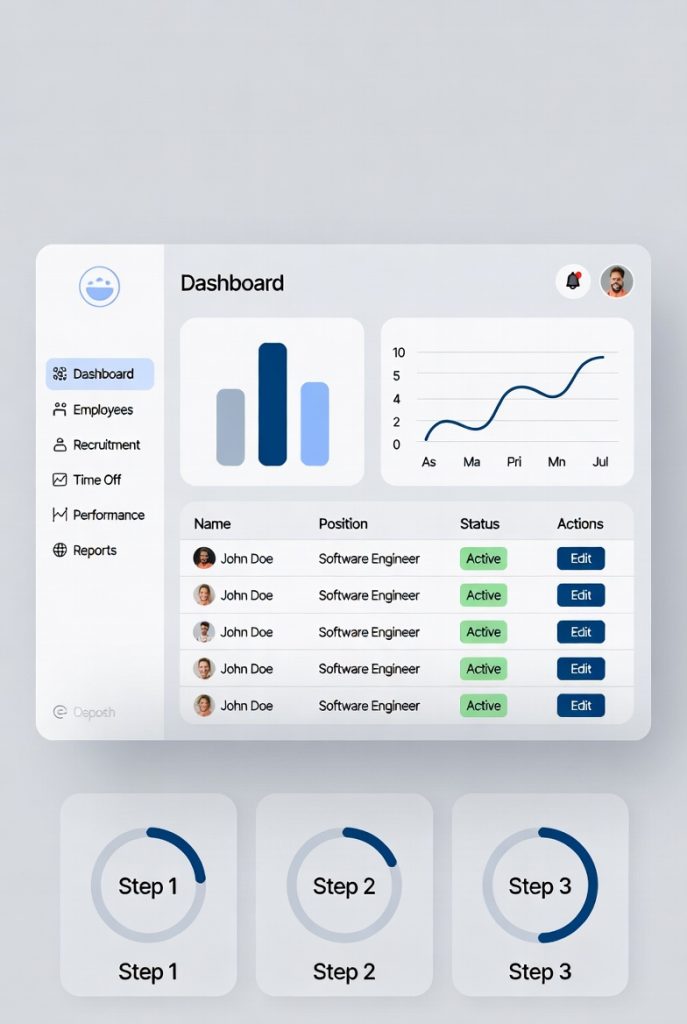
BambooHR’s onboarding module illustrates several interface design strategies:
- Central task dashboard: Lists pending steps in chronological order.
- Progress indicators: Visual cues indicate completion percentage for individual employees.
- Role-based visibility: HR, managers, and employees see only relevant tasks.
- Contextual help: Tooltips or instructions guide users without external support.
Analyzing these elements enhances understanding of workflow visualization in digital systems.
Comparison with Other HR Platforms
Neutral comparisons reveal general patterns in onboarding functionality:
- Step-by-step guidance is standard for new users.
- Visual indicators (progress bars, checklists) are common.
- Role-specific access controls prevent unauthorized edits.
- Modular layout supports comprehension of complex multi-step processes.
By examining multiple platforms, learners can abstract the core educational principles of workflow management.
Educational Takeaways
Onboarding workflows in BambooHR and similar platforms illustrate key principles of digital system design:
- Logical sequencing of tasks
- Clear visibility of responsibilities
- Integration with broader system modules
- Structured guidance to reduce errors and confusion
Understanding these patterns helps learners grasp how HR systems operationalize employee integration in a neutral, educational context.
Conclusion
BambooHR provides a structured, clear example of onboarding workflows within a digital HR platform. By reviewing process logic, dashboard organization, and visual cues, readers gain educational insight into HR system design and functionality without promotional influence.
Disclaimer: This post is for educational and informational purposes only and does not provide financial advice or investment guidance.