Disclaimer: This post is for educational and informational purposes only and does not provide financial advice or investment guidance.
Introduction
Modern HR platforms like BambooHR organize large amounts of employee data into dashboards designed for clarity and efficiency. Understanding dashboard structures and navigation patterns is essential for grasping how digital HR systems operate. This post provides an educational exploration of BambooHR’s interface, focusing on dashboard layout, navigation logic, and interface components, without any promotional or operational instructions.
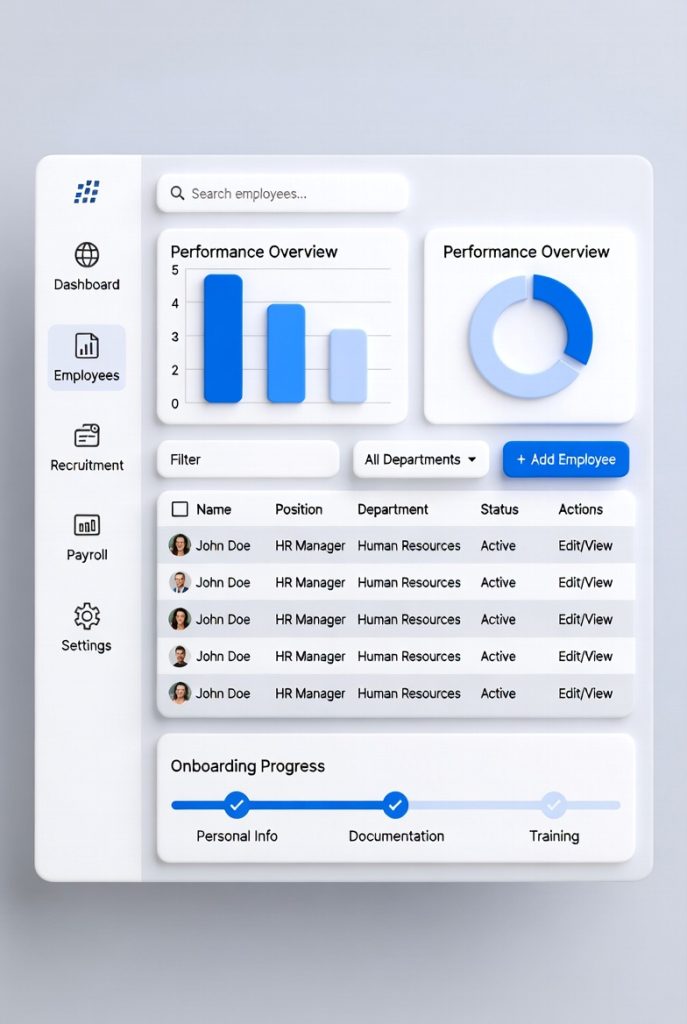
Key Elements of an HR Dashboard
Dashboards are central to digital HR platforms. Educationally, they provide insight into information organization and accessibility. Core elements often include:
- Overview panels: Summarize pending tasks, upcoming events, or notifications.
- Employee activity feed: Presents recent changes or updates in an organized manner.
- Quick-access modules: Links to commonly used sections, such as employee profiles, reports, or time tracking.
- Analytics snapshots: Visualized data on team or department metrics, without requiring interpretation of financial information.
BambooHR demonstrates these features in a structured, intuitive interface suitable for educational analysis.
Navigation Patterns
Understanding navigation logic helps learners conceptualize digital system usability. Common patterns include:
- Sidebar menus: Organized hierarchically by function.
- Top navigation bars: Access to account settings, help, or notifications.
- Search and filter tools: Quickly locate records or modules.
- Contextual links: Embedded links within dashboards for task-specific navigation.
These patterns illustrate general principles used across HR platforms.
Customization and Layout Options
While customization varies between platforms, educational observations reveal typical approaches:
- Widget-based dashboards: Users can arrange or prioritize modules for informational clarity.
- Role-specific displays: Managers, employees, and HR personnel see relevant sections based on access rights.
- Expandable or collapsible panels: Provide scalable information without cluttering the interface.
BambooHR’s dashboard design demonstrates how structured information presentation improves comprehension.
Interface Principles and Visual Clarity
Studying interface design in HR systems helps learners understand usability concepts:
- Consistent color schemes: Highlight sections or status updates without overwhelming the user.
- Clear typography and spacing: Enhance readability and reduce cognitive load.
- Logical grouping of features: Facilitates intuitive navigation.
- Minimal visual distractions: Supports focus on essential information.
These principles are widely applicable to digital platforms beyond HR.
Comparing Dashboard Designs Across Platforms
Neutral comparisons highlight shared design logic:
- Centralized summary of relevant data.
- Hierarchical menus and task prioritization.
- Role-aware visibility of sections and modules.
- Use of visual indicators to highlight important updates.
Analyzing multiple platforms allows learners to understand interface strategy rather than memorizing specific layouts.
Conclusion
BambooHR offers a clear example of how digital HR dashboards organize, display, and facilitate interaction with employee information. By examining layout, navigation, and visual principles, learners gain educational insight into the design and usability of modern HR systems.
Disclaimer: This post is for educational and informational purposes only and does not provide financial advice or investment guidance.