Disclaimer: This post is for educational and informational purposes only and does not provide financial advice or investment guidance.
Introduction
Managing employee information digitally has become an essential part of modern organizations. Platforms like BambooHR provide structured ways to store, organize, and access personnel data, making administrative processes more transparent. This post presents an educational overview of how employee data management works in BambooHR, emphasizing interface navigation, organizational logic, and general workflows.
Structuring Employee Records
Effective HR platforms rely on standardized formats for storing information. Key elements include:
- Personal information: Names, contact details, and identifiers.
- Employment history: Job roles, tenure, and departmental assignments.
- Skill and competency tracking: Records of certifications, training, or professional development.
- Document storage: Secure access to employment agreements, policy acknowledgments, or HR forms.
BambooHR exemplifies structured recordkeeping, showing how digital systems maintain clarity and consistency.
Accessing and Updating Information
Educational understanding of platform workflows requires familiarity with common procedures:
- Navigating employee profiles: Users can view summarized information or detailed tabs.
- Editing data based on role: Access permissions determine who can update personal or departmental information.
- Reviewing historical records: Platforms maintain logs to provide chronological context without exposing sensitive edits.
- Searching across records: Efficient retrieval is enabled via search bars and filters.
These features illustrate how structured access reduces errors and supports administrative oversight.
Workflow Automation in Data Management
Many HR systems incorporate automated steps to improve efficiency. Examples include:
- Notifications for pending updates or approvals.
- Predefined templates for new records or onboarding forms.
- Automated reminders for compliance or certification renewals.
BambooHR uses such features to illustrate the principles of workflow automation, though the focus remains educational rather than operational.
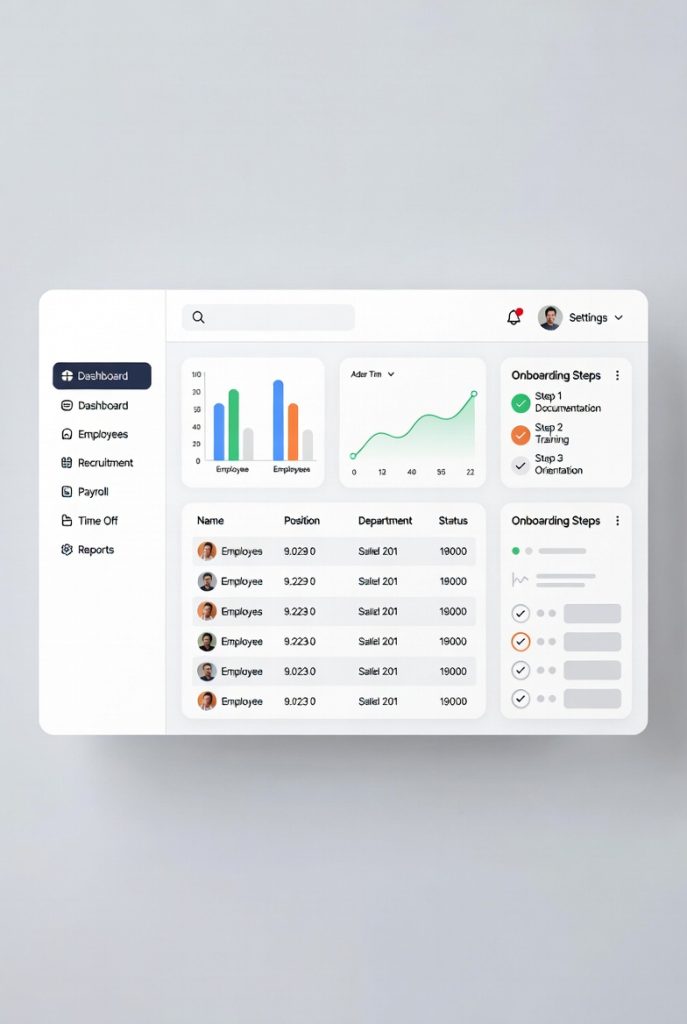
Visual Layout and Dashboard Overview
Understanding layout principles is crucial for comprehension of HR systems. Typical design choices include:
- Summary dashboards: High-level views of data trends, pending tasks, or alerts.
- Navigation sidebars: Quick access to modules such as employee records, reports, or time tracking.
- Information hierarchy: Prioritization of sections based on user role.
These design patterns are widely applicable and help learners understand common structures in digital HR tools.
Comparing Data Management Across Platforms
Neutral comparisons can enhance educational insight. Other platforms, while visually different, often share core logic:
- Consistent use of tabbed profiles and modules.
- Role-dependent access to sensitive information.
- Central dashboards summarizing key metrics or pending actions.
By reviewing multiple systems, learners can abstract principles rather than memorizing specific UI details.
Conclusion
BambooHR provides a clear case study of how employee data is structured, accessed, and maintained in digital HR platforms. Understanding these principles enables users to interpret workflows, role-based visibility, and interface logic across multiple HR systems in a neutral, educational context.
Disclaimer: This post is for educational and informational purposes only and does not provide financial advice or investment guidance.